10 October 2026 · WeBecome
How to Travel Alone Confidently, Step by Step
Share your future. Find people going the same way.
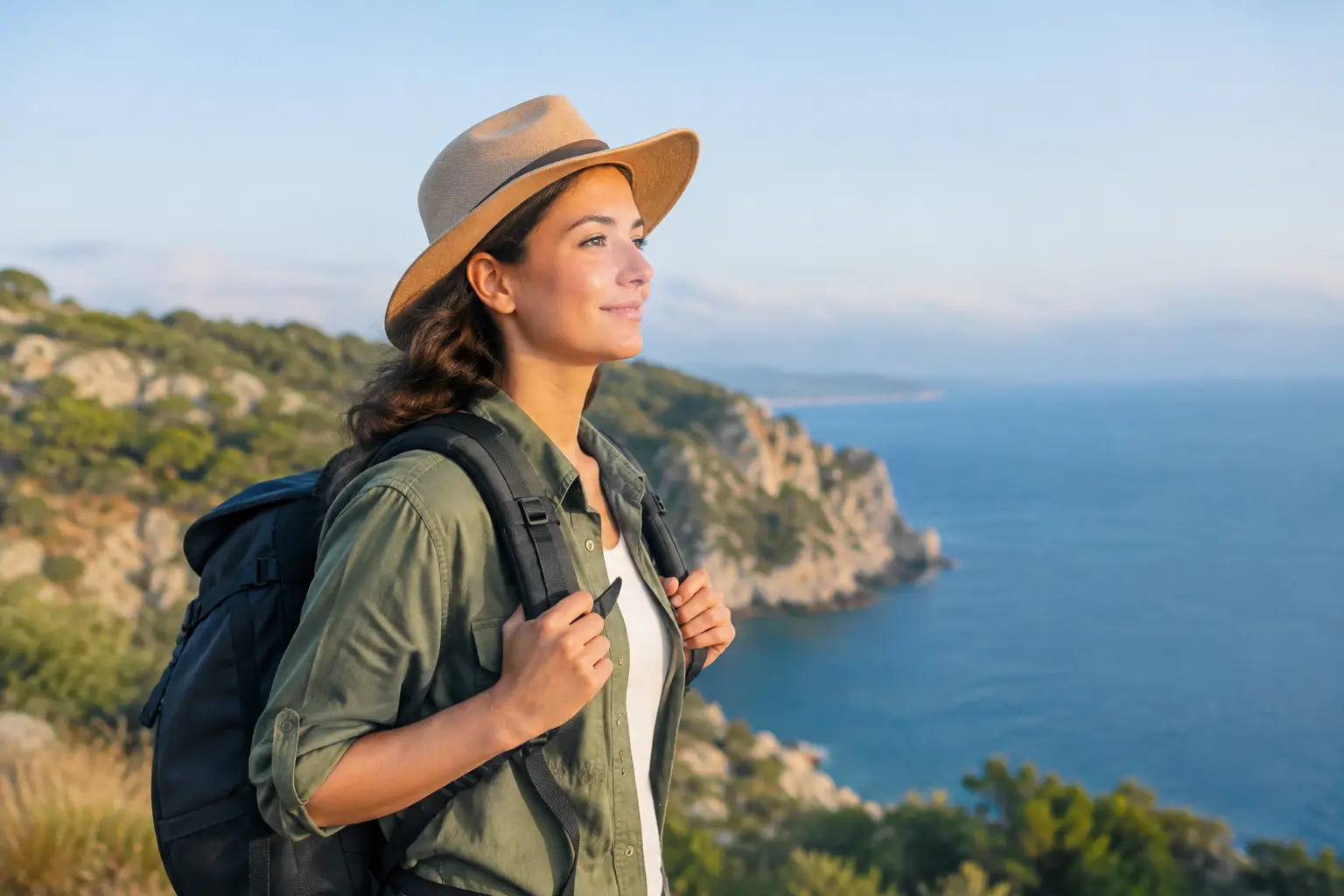
The first solo booking can feel bigger than a plane ticket. It can feel like a declaration: I trust myself to go. If you are wondering how to travel alone confidently, start here: confidence is not a personality trait you either have or lack. It is evidence you collect, one decision at a time.
You do not need to become the sort of person who never feels nervous. You only need to become someone who knows what to do when nerves arrive. That might begin with choosing the destination, booking one night of accommodation or telling a friend that this is the year you take your first trip alone.
Confidence comes after the first step
Many people wait to feel ready before travelling alone. The trouble is that readiness rarely arrives as a dramatic, certain feeling. More often, it grows after you have done a few small things that prove you can look after yourself.
You find the right platform at a station. You ask a café owner for a recommendation. You recover when a museum is shut or a bus is late. None of those moments makes for a glossy holiday photograph, but they matter. They show you that you can adapt without someone else taking over.
Treat your first solo trip as practice, not a test. You are not there to perform independence perfectly, make friends every evening or return transformed beyond recognition. You are there to experience a place on your own terms and notice what you are capable of.
How to travel alone confidently by choosing a kind first trip
Your first destination does not need to be the most far-flung place on your list. In fact, a simpler first trip is often the bravest choice because it lets you focus on building trust in yourself rather than managing every possible complication.
Choose a place that feels manageable for your budget, comfort and experience. A city with straightforward transport, accommodation in a central neighbourhood and a language you have some familiarity with can lower the practical pressure. A long weekend somewhere in the UK or Europe counts. So does one night in a coastal town you have always meant to visit.
This is not about playing small forever. It is about giving your future self a solid first chapter. Once you have navigated a trip that felt slightly outside your usual life, the next one can stretch further.
Be honest about what makes you feel settled. Some people love hostels because shared breakfasts and walking tours make conversation easier. Others sleep better in a private room or small hotel. There is no prize for choosing the most sociable or cheapest option if it leaves you exhausted. Confidence grows faster when your plan has room for your real needs.
Make a plan that supports you, not controls you
A little preparation creates breathing space. Overplanning, on the other hand, can turn a holiday into an itinerary you are frightened to disrupt. Aim for a few anchors rather than a minute-by-minute schedule.
Book your first night somewhere with good recent reviews and clear arrival instructions. Know how you will get there from the airport or station, including what you will do if your flight is delayed. Save key addresses, transport details and booking confirmations where you can access them without relying entirely on mobile data.
Before you leave, organise travel insurance that suits your trip, check entry requirements and make sure your bank knows where you will be if necessary. Carry a backup payment method separately from your main card. These are not signs that you expect trouble. They are quiet ways of telling yourself: I have thought ahead.
It also helps to give someone you trust your broad plans, accommodation details and a rough check-in rhythm. You do not need to report every movement. A simple message after arrival and another at the end of the day can be reassuring for both of you, while still leaving the journey fully yours.
Arrive slowly on the first day
The first few hours can be the wobbliest. You may be tired, overstimulated and suddenly aware that there is nobody beside you to ask, What do you fancy doing? That is normal. Do not make the first afternoon carry the emotional weight of the whole trip.
Give yourself one easy task: check in, unpack, buy water or find a nearby café. Sit down somewhere public and unhurried. Watch the rhythm of the place. Your mind often catches up once your body has eaten, rested and understood its surroundings.
A useful first-day ritual is to take a short walk in daylight around your accommodation. Notice the route to a busy street, a shop, public transport and somewhere you would be happy to eat alone. Familiarity is calming. By evening, a place that felt completely unknown can already contain a handful of recognisable corners.
If you feel lonely that first night, do not treat it as proof that solo travel is not for you. Loneliness can visit even on a much-wanted trip, just as it can at home. Order something comforting, ring a friend, write down what you noticed that day or have an early night. Tomorrow will feel different.
Be open, but keep your judgement
Travelling alone can make you more available to chance conversations, invitations and new friendships. That can be one of its great pleasures. It also means listening to your instincts without apologising for them.
You never owe a stranger your full name, hotel details or plans for the evening. If a situation feels off, leave. You do not need a convincing explanation, and politeness is never more important than getting yourself somewhere you feel safe. Move towards a busy, well-lit place, speak to staff or call a taxi if that is what helps.
The balance will depend on where you are and what you are doing. A late-night bar, a remote hike and a group food tour ask different things of you. Research local customs, trust practical caution and allow yourself to enjoy people too. Being sensible does not mean being shut down.
Create small moments of connection
Solo does not have to mean isolated. Often, connection is easier when you are on your own because you are more likely to start the conversation.
Choose activities with a natural shared focus: a walking tour, cooking class, gallery talk or day trip. Ask the person beside you what they have enjoyed so far. Mention that you are travelling on your own if it feels comfortable. You may share one excellent lunch, exchange recommendations and never meet again. That can still be a meaningful part of the journey.
Equally, protect time that belongs only to you. Eat the meal you want. Spend an hour in the bookshop. Leave an attraction early because you have seen enough. One of the most powerful parts of travelling alone is discovering that your preferences are worth following without needing group agreement.
Turn nerves into visible progress
A solo trip is made of small acts that are easy to forget once you are home: the day you booked, the first meal you ordered for one, the wrong turn you calmly corrected, the view you reached because you went anyway. Keep a simple record of them.
You could write a few lines each evening, save one photo with a note about what it took to get there or share a progress update with people who believe in your future. On WeBecome, a declaration such as Take my first solo trip can become a journey others encourage before the departure gate is even in sight.
This is not about proving anything online. It is about seeing the evidence clearly. Courage becomes more believable when you can point to it.
When you come home, resist the urge to judge the holiday only by whether everything went smoothly. Ask a better question: what did I do that I once thought I could not do alone? Keep that answer close. The next step may be another trip, a longer one, or simply booking a table for one in your own city. Your future is made real in exactly these moments.
Written by, S. Fatima, Advisor, WeBecome
The Sunday letter
One calm read a week about who you are becoming.
No spam. Leave any time. See our Privacy notice.
Comments
What do you think? Share your own journey too.
Want to join the talk?